Skip to content
The Green ValleySolar EPC · Auckland Get in touch
Process

Ten steps.
No surprises in the middle.

Most of the risk in a solar project is front-loaded: an over-optimistic study, a roof that won’t take the load, or a grid application lodged too late. Our sequence is deliberately slow at the start and fast once the design is signed.

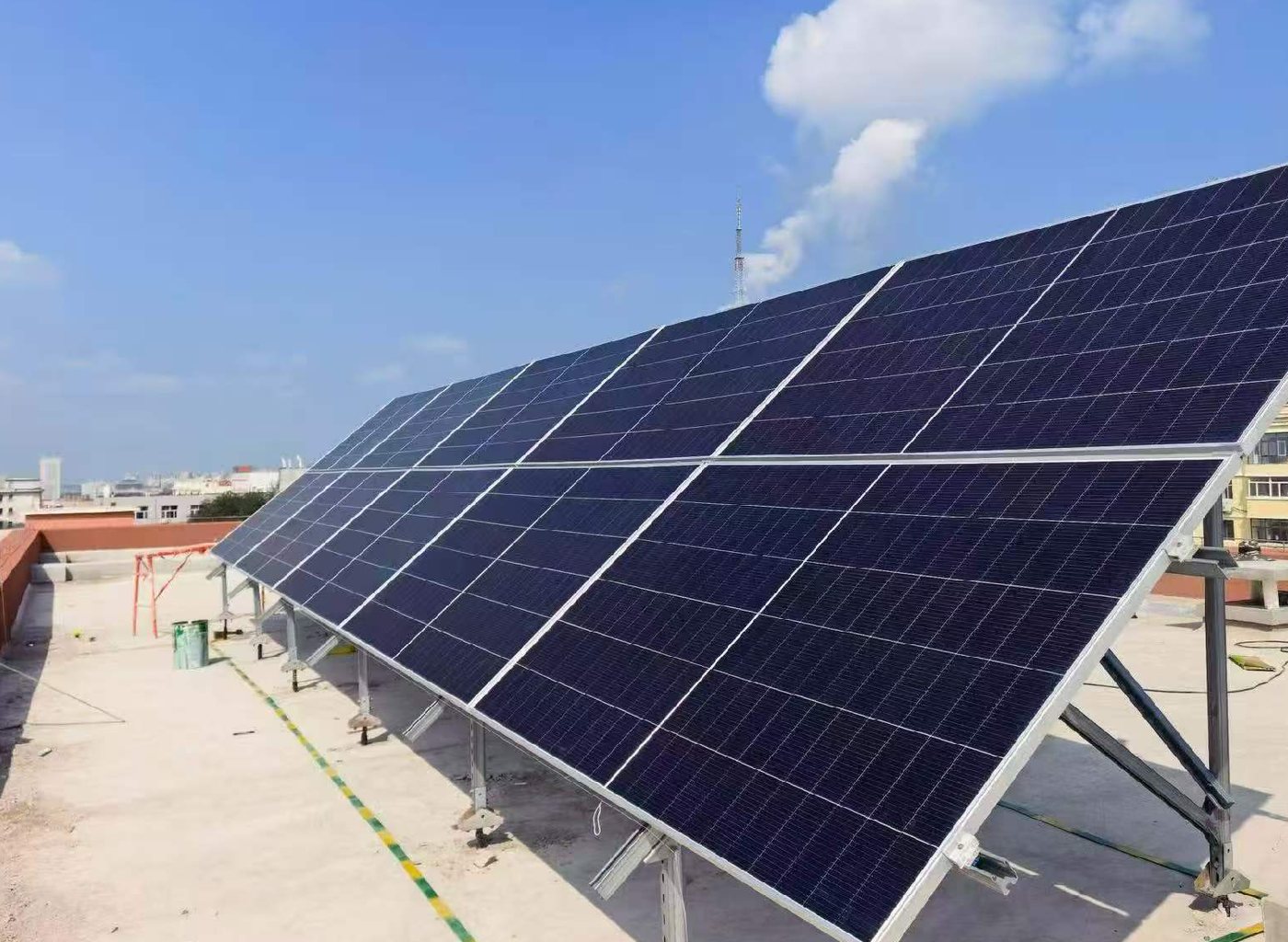
A completed tilt-frame solar array on a commercial roof
01

First conversation

A short call to understand the site, the operation and what is driving the enquiry — a rising bill, a new building, a sustainability commitment, or a network constraint. We will tell you at this point if we think solar is the wrong answer.About 30 minutes

02

Bills and interval data

You send twelve months of electricity invoices and, where the meter supports it, half-hourly interval data from your retailer. We also want the ICP number, a roof plan or a recent aerial image, and any known plans for the building.You provide · 1–3 days

03

Desktop feasibility study

We model the array against your real load profile: yield, self-consumption, export, capital cost, annual saving, simple payback and 25-year return. If the numbers are marginal, the report says so.5–10 working days

04

Site survey

On site: roof structure, cladding type, purlin spacing and condition, shading survey, switchboard capacity and available ways, cable routes, access and anchor points, and a look at the incoming supply.Half a day on site

05

Design and fixed proposal

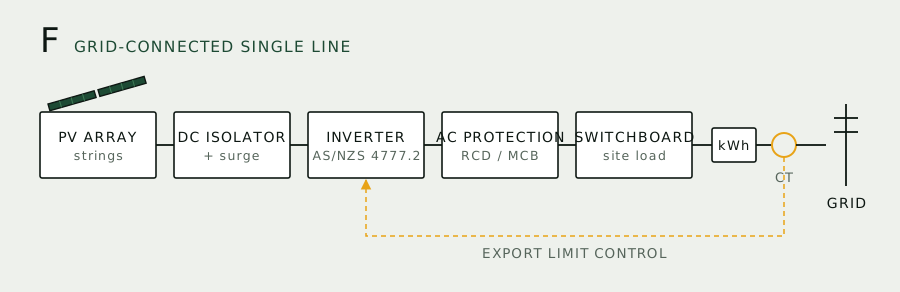
Array layout, single-line diagram, structural verification, inverter and protection selection, export strategy, programme, and a fixed price with the inclusions and exclusions written down.10–15 working days

06

Consents and grid application

Distributed generation application to your lines company under Part 6 of the Electricity Industry Participation Code, plus building consent where the structure requires it. Started early, because this is the step that sets the programme.Network response typically 10–30 working days

07

Supply and logistics

Modules, inverters, mounting and balance of system ordered, landed, inspected on arrival and staged to the build programme. Lead times confirmed in writing before deposit.Programme dependent

08

Installation

Safety plan and edge protection first, then mounting, DC, AC, switchboard works and metering. Sequenced around your operating hours so the site keeps running.Days to weeks by size

09

Commissioning and testing

Insulation resistance, polarity, earth continuity, inverter grid settings, anti-islanding and export limit verification. Certificate of Compliance and Electrical Safety Certificate issued.1–2 days

10

Handover and monitoring

As-built drawings, test results, warranty documents, an operating guide and monitoring logins in your name. We check the first month of output against the model and tell you how it tracked.Ongoing

Durations are typical for a commercial project and depend on size, network response times and consent requirements. Every project gets a written programme with its own dates before work starts.
What we need from you

Five things get us to a real number.

The more of this you can send up front, the faster and more accurate the feasibility study. If you only have some of it, send what you have — we can chase the rest.

  • Twelve months of electricity invoices — all pages, including the lines charges.
  • Your ICP number, printed on any invoice. It lets us identify the network and check the connection.
  • Half-hourly interval data if your meter records it. Your retailer will supply it on request, usually as a CSV.
  • A roof plan, elevation or recent aerial photo, plus the roof’s age and cladding type.
  • What is changing. New plant, an extension, extra shifts, EV fleet or refrigeration upgrades all change the sizing.
Compliance

What has to be true before it can be energised.

Grid-connected generation in New Zealand sits inside a specific regulatory frame. These are the parts that affect your programme.

Single line diagram of a grid-connected solar system from array through DC isolation, inverter, AC protection and switchboard to the grid, with CT-based export limit control

Distributed generation approval

Connecting generation to the network is governed by Part 6 of the Electricity Industry Participation Code. Your lines company — Vector across most of Auckland — assesses the application and sets any export limit for your connection. We prepare and lodge it.

Inverter standards

Grid-tied inverters must comply with AS/NZS 4777.2 and appear on the Electricity Authority’s list of accepted inverters. This covers anti-islanding, voltage and frequency response and power quality.

Electrical work and certification

Grid-tied electrical work must be carried out by an EWRB-registered electrical worker with the appropriate registration and endorsement. Completed work is certified with a Certificate of Compliance and an Electrical Safety Certificate.

Building consent

Many roof-mounted arrays are exempt, but ground mounts, canopies and structures — and some roof installations depending on load and council — require consent. We identify the path at design stage rather than discovering it on site.

Regulatory requirements change. We confirm the current position with your network and territorial authority for every project, and we recommend you verify anything material with the Electricity Authority, WorkSafe’s Energy Safety team or your council directly.

Next step

Find out what your roof is worth.

Send us twelve months of power bills and a roof plan. We come back with a yield model, a layout, an indicative price and an honest view on whether the numbers work.